


How to create a garden that is a feast for the eyes and stomach
Though my background is primarily in ornamental horticulture, and I’ll never stop loving bromeliads, orchids, gingers and other flowering plants, I’ve always been drawn to the edible side of gardening, especially here in South Louisiana. The issues are that most people don’t have the space for a large vegetable garden, and even if they do, not everyone wants the look of a traditional vegetable plot. So the question becomes, how do you grow great produce while still maintaining a beautiful, polished landscape?
Over the past decade, I’ve experimented with a number of approaches in my own yard, and I’ve found several ways to blend productivity with good design. Here are a few ideas to help you get started.
If you have the space for a dedicated vegetable garden, or you’re planning to build one, consider using raised beds arranged in a dual symmetrical layout. Aligning the beds along north-south and east-west axes creates a formal, organized appearance while clearly defining the garden space. Finish the pathways with pea gravel, and the result is a clean, timeless look with a touch of French garden influence.
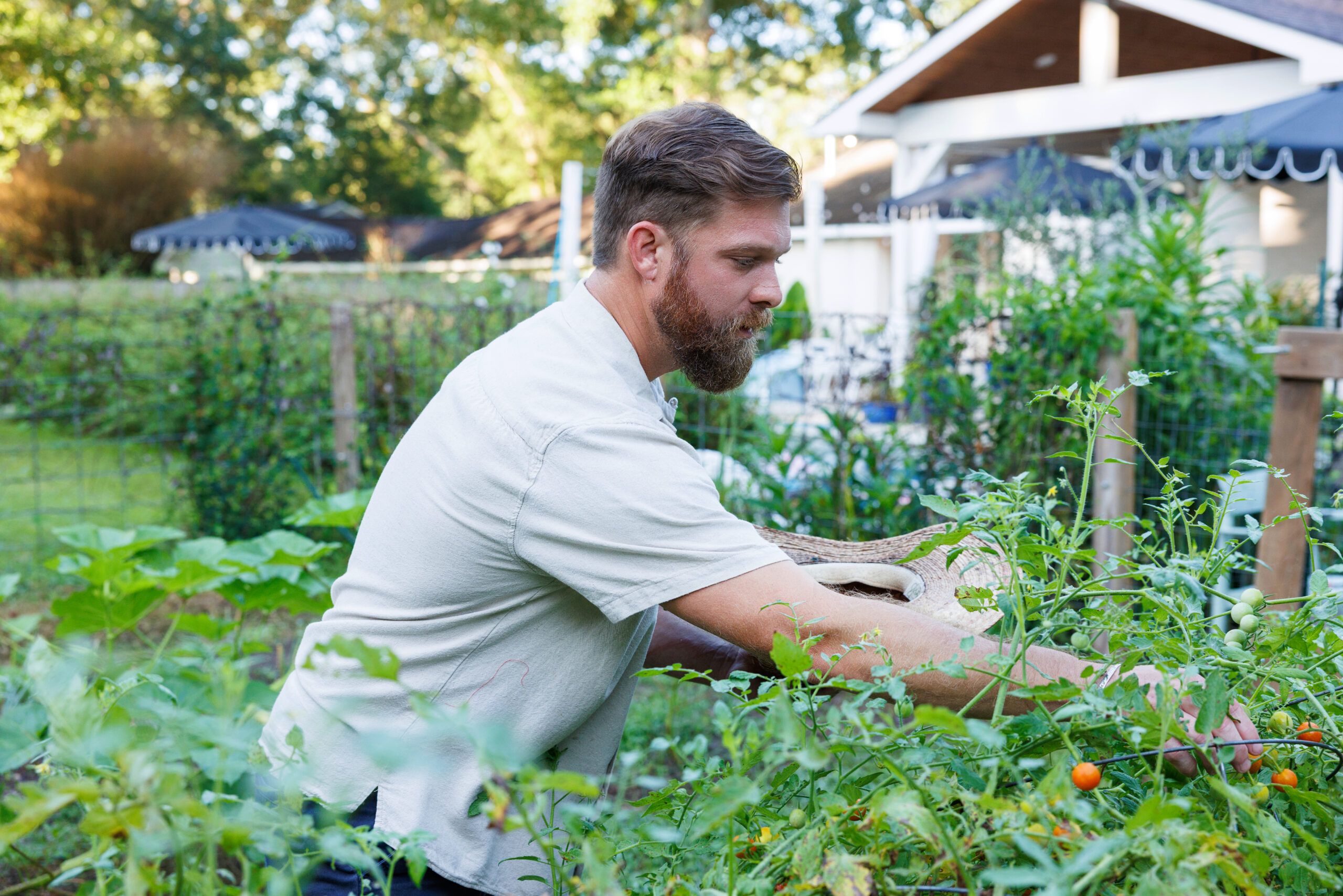
Another one of my favorite techniques is incorporating vegetables directly into existing landscape beds instead of keeping them in their own separate area. Of course, some vegetables are better suited to this than others. Tomatoes and okra, for example, can become a bit unruly, but carrots bring a soft, lacey texture that pairs surprisingly well with ornamental plants. Artichokes are another excellent choice, offering bold, architectural foliage that can easily hold its own in a mixed border. Because you will likely be harvesting these crops throughout the year, I would suggest using them in front of your garden bed where traditional warm and cool-season annuals grow.
Fruit trees can be a little more challenging to incorporate into a polished landscape, but there are a few ways to make them feel intentional. One of my favorites is espalier, a technique that trains trees to grow flat against a wall, fence or trellis. The result is both highly productive and undeniably elegant, turning a fruit tree into a living piece of garden architecture while taking up far less space than a traditional tree.
Containers are another great option, especially if you’re working with a smaller yard or simply want more flexibility. High-quality ceramic, terracotta or concrete pots in coordinated colors can elevate the look of almost any patio or outdoor living space. Basil, peppers, strawberries and even dwarf citrus all thrive in containers. As an added bonus, you can move them to capture more sunlight or protect them from approaching storms.
Growing fruits and vegetables doesn’t have to give your yard a homestead feel. When they’re incorporated thoughtfully, edible plants can complement traditional Southern landscapes just as naturally as azaleas, camellias and gardenias. They bring texture, color, fragrance and, of course, the reward of harvesting fresh produce just steps from your back door.
These are just a few of the approaches that have worked well in my own landscape. With a little planning and creativity, you can enjoy a garden that’s every bit as beautiful as it is productive.
Lee Rouse holds a master’s degree in horticulture, owns Rouse’s Horticulture, and serves as president of the Louisiana Horticulture Society. Find him online at rouseshorticulture.com.