

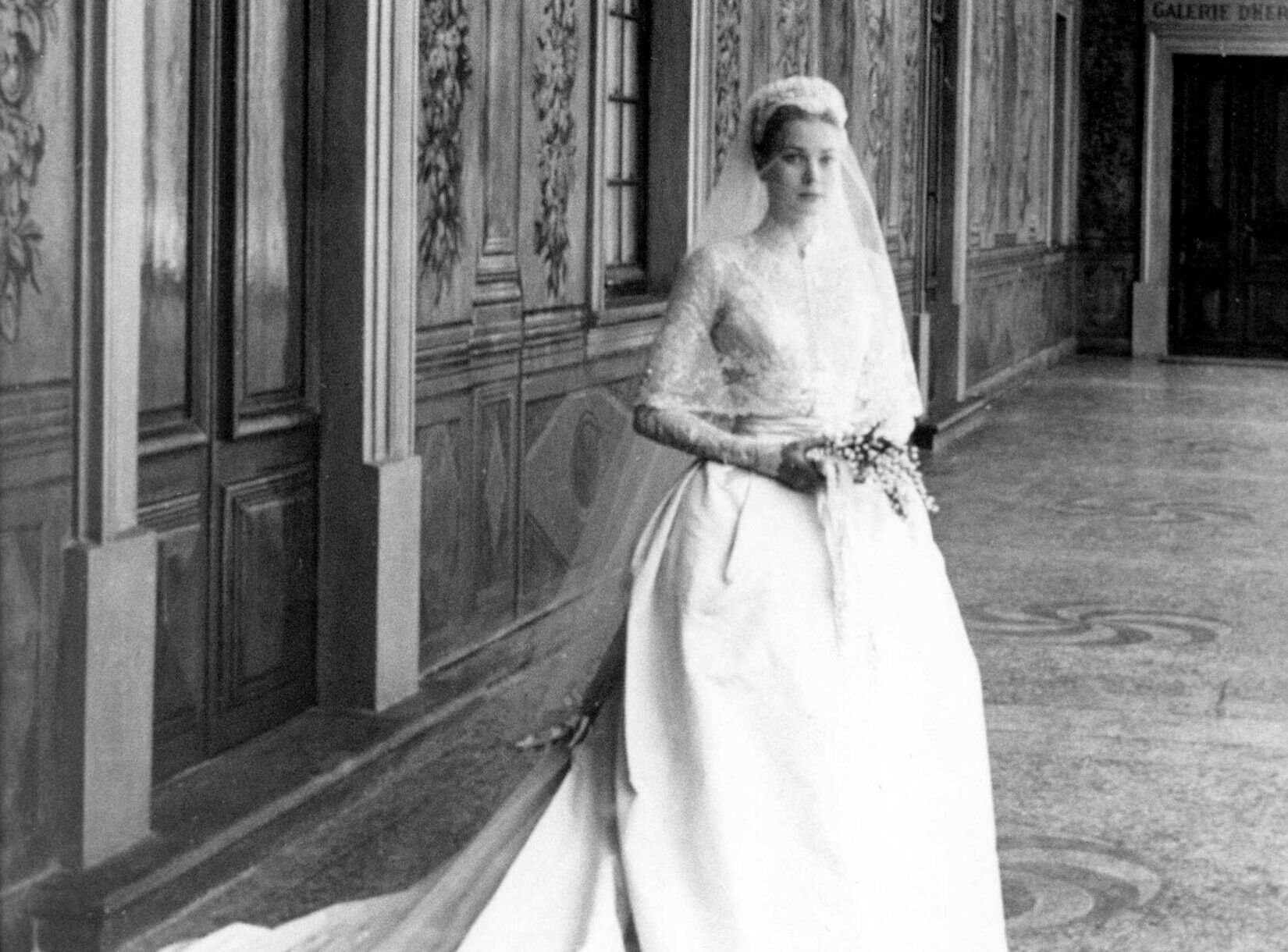
LSU’s Dr. Michael Mamp shares how the 1950s redefined the wedding dress industry
“The 1950s were such an iconic moment in bridal history, particularly in the United States,” Dr. Michael Mamp, Director and Curator of the LSU Textile & Costume Museum, says. This, he explains, is due in large part to wedding gown designer Helen Rose.
Rose designed some of the most iconic wedding gowns in fashion history, including Grace Kelly’s for her royal wedding to the Prince of Monaco, Prince Rainier III, in 1956, as well as Elizabeth Taylor’s costume for her starring role in the 1950 film, Father of the Bride. These memorable gowns established her as the first household name in bridal design and cemented her place in fashion history.
“This was when the bridal industry in America really began to take off, and now, more than 75 years later, it’s bigger than ever,” Mamp explains. “The bridal industry continues to reflect fashion, and it doesn’t show any signs of slowing down.”
And while wedding dresses have always mirrored the prevalent fashion trends of each era in which they occur, the industry continues to develop additional experiences for the bride, like the ritual of going dress shopping with the bride’s mother, sisters and maid of honor, creating a memorable event that is central to the wedding planning process.
“There is a very personal, sentimental component that goes along with the wedding and that is embodied in the dress that is worn for the big day,” Mamp says. “And I think that the pageantry and glamour of a wedding have also only gotten bigger. But particularly, the dress remains at the center of the event and really sets the tone and entire aesthetic and feel for what the wedding will be like.”
From the vintage bridal market gaining major momentum to designers reflecting on wedding fashions of the past in current runway shows, the wedding dress industry continues to evolve while paying homage to the past. But the symbolism of a wedding gown and the defining choice of the dress a bride chooses lives on.
1949 – Anne Louise Monget and Lloyd Augustus Carville were married on November 11, 1949.
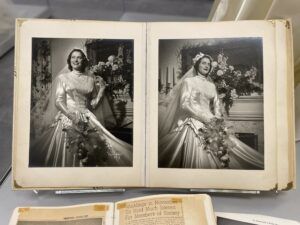
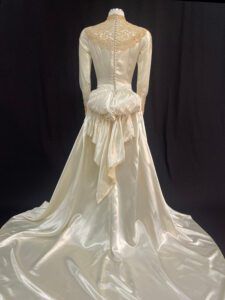
“This cusp style of the late 1940s and early 1950s, while still made of voluminous fabric, as was typical of fashion after World War II, has a longer, leaner overall appearance than the full-skirted looks of the 1950s,” Mamp explains.
1952 – Wynona Edison and Lewis Carroll Peters were married on June 21, 1952, at First United Methodist Church.
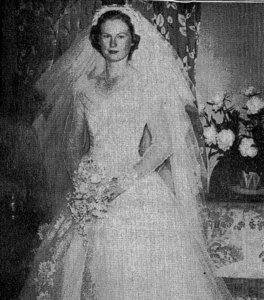
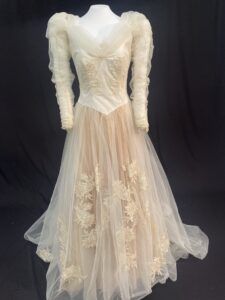
“The bride saw a dress in Vogue that she liked and took the image to a local dressmaker, Odell Ricks, who made this gown inspired by the latest 1952 bridal fashions,” Mamp says. “The film Father of the Bride, starring a young Elizabeth Taylor, cemented the elaborate, layered and embellished wedding gown as the aspirational wedding-day dream of young women across the country. While the dress is from two years after the film, the connection in silhouette and detail is clear.”
1954 – Rita Aucoin and Frederick William Grant were married on June 12, 1954, at First United Methodist Church.
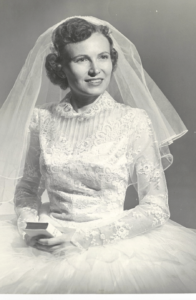
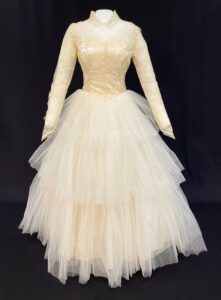
“The hourglass silhouette with a small waist further emphasized by a voluminous skirt, is a quintessential component of post-war fashion influenced by Christian Dior’s ‘New Look,’” Mamp says. “The full skirts were often achieved with layer upon layer of tulle and multiple petticoats.”