



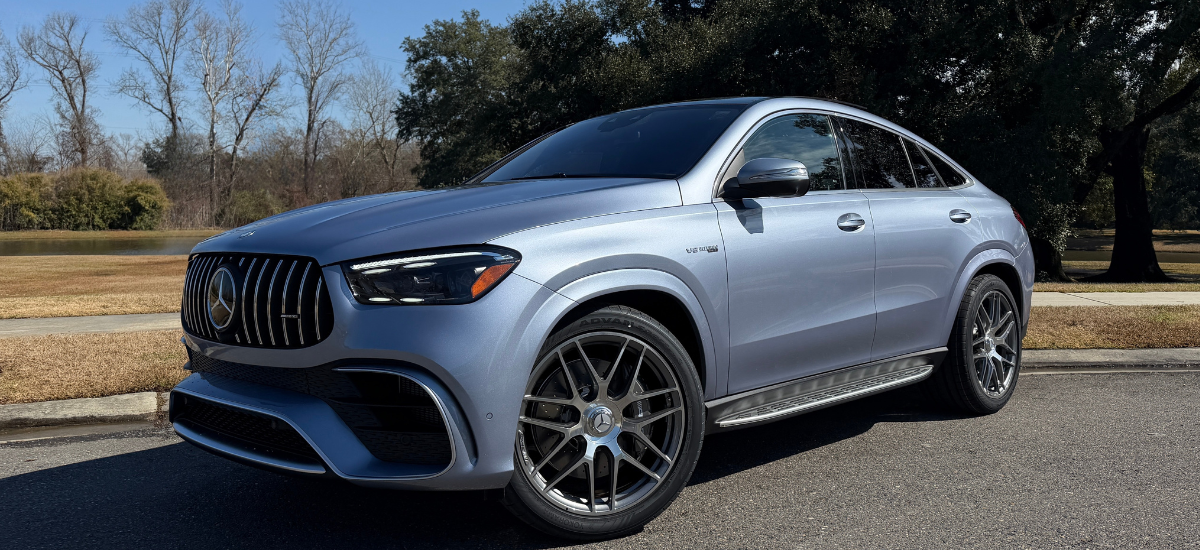
Ask the Expert: Automobile, sponsored by Mercedes-Benz of Baton Rouge
Nick Pentas
Mercedes-Benz of Baton RougeNick started working at Mercedes-Benz of Baton Rouge during the summer of 2001 while attending LSU. After graduating, Nick excelled at 8 different positions and eventually was promoted to General Manager in April of 2013. He began all of this while getting a Business Administration degree from LSU and raising a family of 3 children. When he is not at the office, he loves spending time with his family and travelling. Nick also enjoys being involved in sports and the local community.
How Has Mercedes-Benz Shaped The Modern Automotive Safety Landscape?
Mercedes-Benz has shifted vehicle safety to a proactive prevention—an approach now embedded across the industry. Innovations like crumple zones, airbags, anti-lock braking systems (ABS), and predictive collision-preparation systems elevated expectations around occupant protection and vehicle control. These advancements reshaped government regulations, crash-testing protocols, and consumer safety benchmarks worldwide.
What Patented Mercedes Safety Innovations Stand Out, And How Do They Work?
Several Mercedes technologies have become cornerstones of modern safety engineering: Crumple Zones disperse collision energy across the body structure so occupants avoid absorbing the full force of impact. SRS Airbags deploy instantly to cushion occupants and reduce injury. Anti-Lock Brakes (ABS) hydraulically pulse more than 30 times per second to prevent wheel lockup, allowing shorter, more controlled braking.
What Is Pre-Safe®, And How Does It Protect Passengers Before A Collision?
PRE-SAFE® is a predictive safety system designed to prepare the cabin for impact the moment sensors detect a likely collision. The system can pre-tension seatbelts, reposition seatbacks upright, and close windows and the sunroof. After airbag deployment, it may reopen windows to vent airbag smoke. Mercedes has expanded this system with innovations like PRE-SAFE® Sound, which emits a specific frequency that triggers a natural reflex to protect the inner ear.
How Has Mercedes Contributed To Assisted And Autonomous Driving Technology?
In 1999, Mercedes introduced the first radar-based adaptive cruise control system on the S-Class—technology that quickly became the industry standard for distance-based speed and collision management, paving the way for modern driver-assist systems.
What’s Next For Mercedes In Autonomous Technology?
Mercedes remains a leader with DRIVE PILOT, the first certified Level 3 autonomous system in select U.S. markets, enabling hands-off driving up to 40 mph on divided highways. The upcoming MB.DRIVE ASSIST PRO++ will support monitored point-to-point driving and navigate intersections, stop signs, and traffic lights. Future development continues to focus on autonomy, reduced driver workload, and road safety for all.
 10949 Airline Hwy, Baton Rouge, LA 70816 | (225) 424-2241 | MBOBR.COM