


An easy-to-grow flower packed with sacred symbolism
As spring arrives in South Louisiana and Easter approaches, it has me thinking about which flowers and plants to add to our yard this season. We’ve been working on a few garden design projects in the backyard, and recently, my wife and I started discussing adding a trellis or two and deciding what we might grow on it. That conversation quickly reminded me of the passion flower vine. It produces one of the most beautiful and intricate blooms we can grow here in the south, and it’s surprisingly hardy, too. But how did this remarkable flower acquire its name?
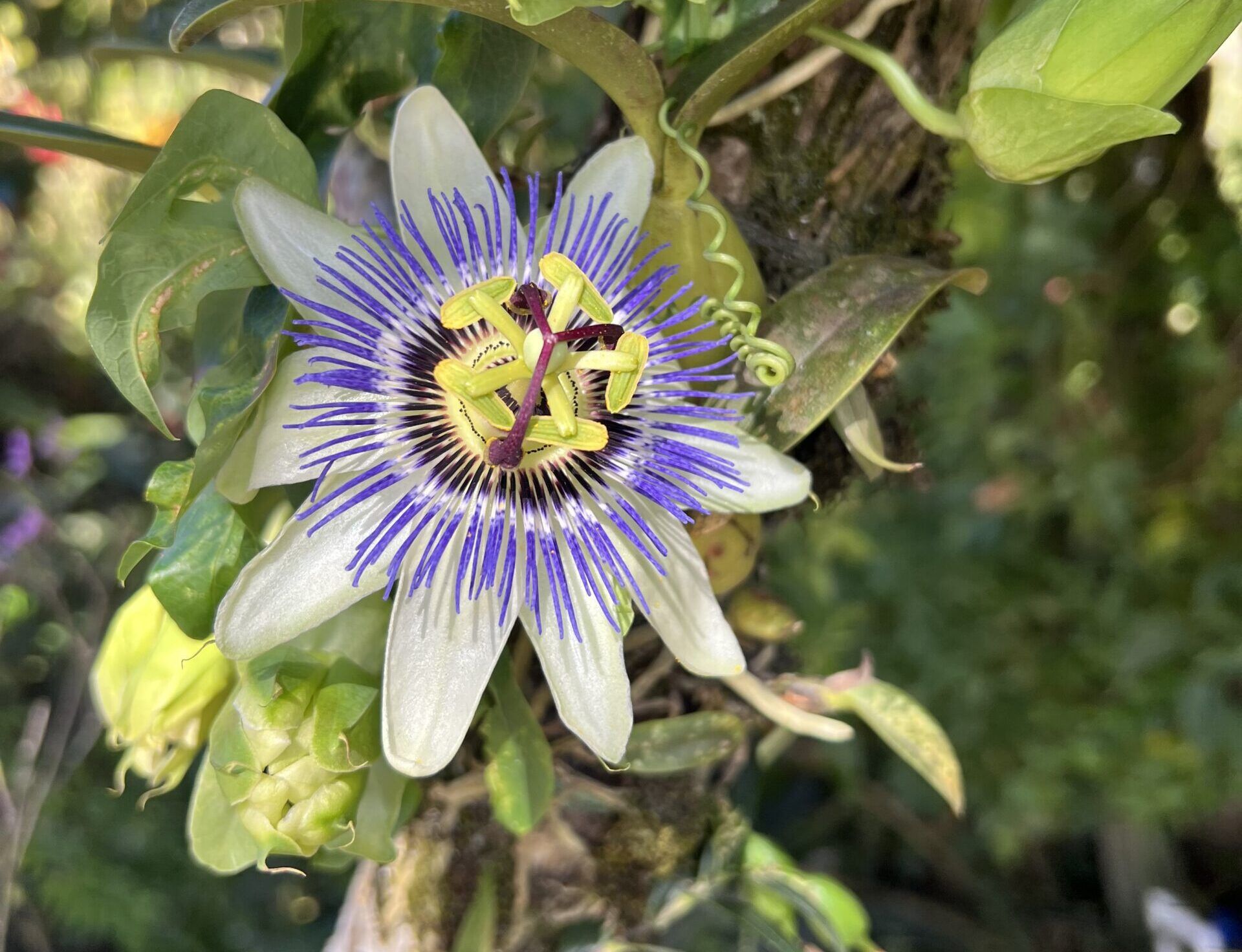
In the late 1500s and early 1600s, Spanish missionaries in South America encountered the passion flower vine and named it La Flor de la Pasión (Flower of the Passion) or Flor de las Cinco Llagas (Flower of the Five Wounds). They used its striking and highly structured form as a visual aid to teach the story of Christ’s Passion. The flower’s 10 petals and sepals were said to represent the 10 faithful apostles (excluding Judas and Peter). The central corona, the ring of delicate filaments, symbolized the crown of thorns. The five stamens represented the five wounds of Christ, and the three stigmas stood for the three nails of the crucifixion. Even the plant’s coiling tendrils were interpreted as the whips and ropes used during the scourging, while the central column suggested the pillar where Jesus was beaten. Because each bloom lasts only a short time, the flower was also seen as reflecting the brief but intense period of Christ’s suffering. This botanical symbolism became a powerful teaching tool used by missionaries, particularly during Holy Week.
With the story behind its name in mind, it feels especially fitting to consider growing passion flowers in our own south Louisiana gardens this time of year. Fortunately, they’re quite easy to grow and well-suited to our climate. Choose a sunny-to-partially shaded location with fertile, well-drained soil, and install a sturdy trellis, fence or arbor early on. These vigorous vines can easily grow 10 to 15 feet in a single season.
Water deeply but infrequently to keep the soil evenly moist without becoming soggy, especially during the plant’s first year. Once established, the vines are fairly tolerant of short dry periods. Apply a 2 to 3-inch layer of mulch around the base to conserve moisture and protect roots during winter. Feed lightly with a balanced fertilizer in early spring and again in midsummer, but avoid fertilizers that are high in nitrogen, which encourage leafy growth at the expense of blooms. Prune back older stems in early spring to keep the plant tidy and stimulate fresh growth. With these simple practices, your vine will reward you with its striking flowers and possibly even fruit, from early summer through fall.
Both common passion flower species grown in our region, Passiflora edulis and Passiflora incarnata, are excellent for attracting pollinators such as carpenter bees and honeybees. The native species, Passiflora incarnata, also attracts hummingbirds and produces edible fruit known as maypops.
Whether you grow the vine for its symbolism, its remarkable beauty or its fruit, adding a passion flower to your landscape is sure to capture the attention of visitors and spark conversation in the garden.
Lee Rouse holds a master’s degree in horticulture, owns Rouse’s Horticulture, and serves as president of the Louisiana Horticulture Society. Find him online at rouseshorticulture.com.