


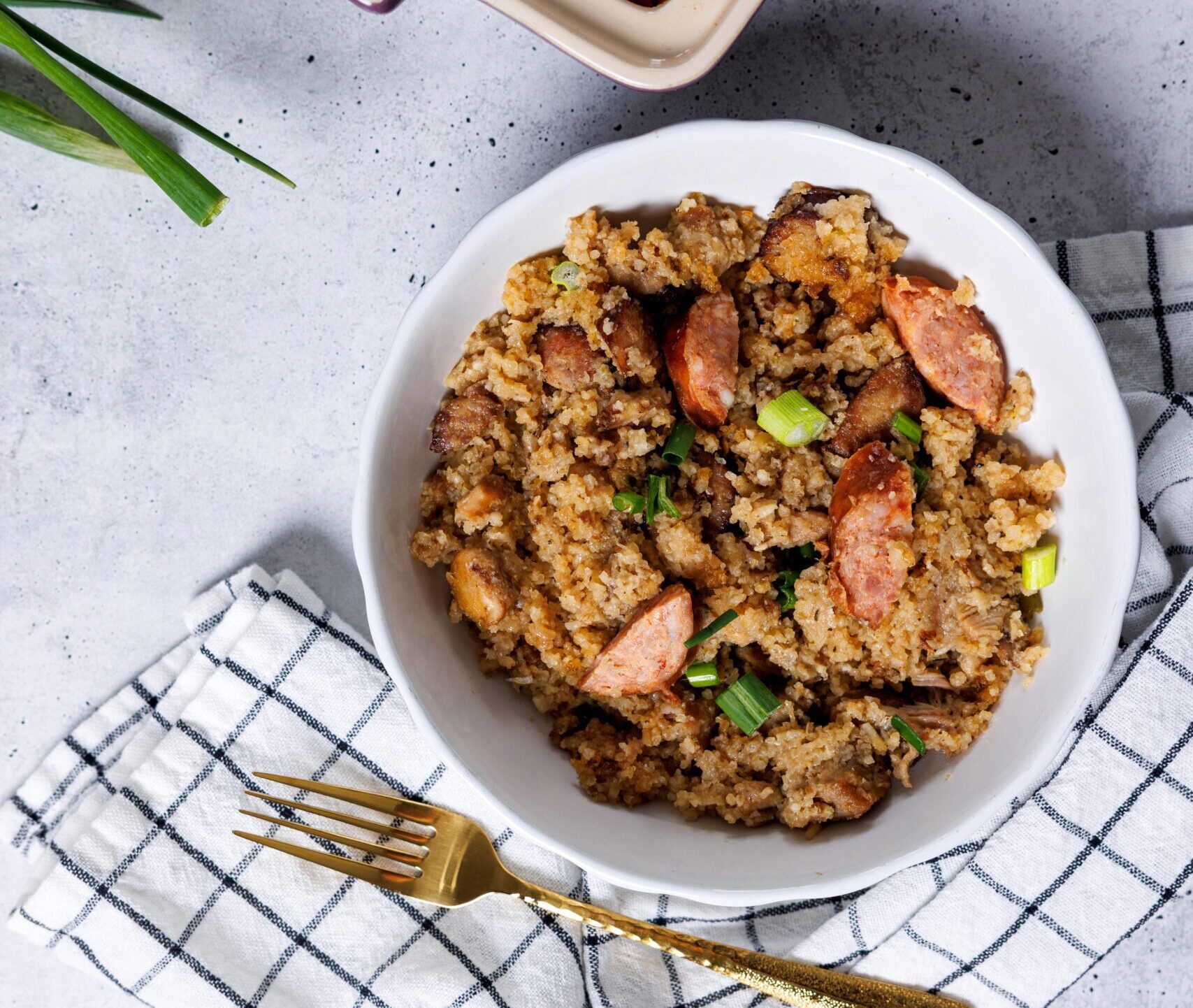
Get all of the flavor and none of the hassle with this simplified jambalaya recipe
In Louisiana, jambalaya isn’t just a dish; it’s a story. A pot full of history, culture and community, passed down from kitchens to cookouts, from Sunday dinners to festival grounds. It’s one of those meals that doesn’t ask for perfection, just presence. You gather. You stir. You taste. And somehow it always turns out just right.
Jambalaya traces its roots back to Spanish and French influences, often compared to paella but reimagined with Louisiana soul. In the southern part of the state, Creole-style jambalaya leans tomato-based, while Cajun jambalaya, which many of us grew up on, gets its rich color and depth from browned meats and a slow build of flavor. No matter the version, one thing remains true: it’s meant to feed many and satisfy all.
Traditionally, jambalaya is a labor of love. It requires layering flavors in stages: browning meats, sautéing the trinity, building a roux-like base, then carefully cooking the rice just right. But let’s be real: these days, we don’t always have time to stand over a pot, even when we crave something that tastes like home.
That’s where this No-Hassle Louisiana Jambalaya comes in. This version captures the essence of what makes jambalaya so special: the smoky meats, the savory depth, the aromatic vegetables, but simplifies the process in a way that fits real life. Everything cooks together in one dish, right in the oven. No babysitting. Just bold, comforting flavor with minimal effort.
We start with chicken thighs for richness, smoked sausage for that signature bite, and tender chunks of pork shoulder that bring a slow-cooked feel without the wait. The base is where the magic happens, uncooked rice baked in a mixture of beef broth, French onion soup and butter. As it cooks, the rice absorbs every bit of flavor, creating a dish that’s deeply seasoned and perfectly satisfying.
Of course, no Louisiana recipe is complete without the trinity (onion, bell pepper and celery) sautéed just enough to release its flavor before joining the dish. From there, it’s as simple as combining everything, covering tightly and letting the oven do the work.
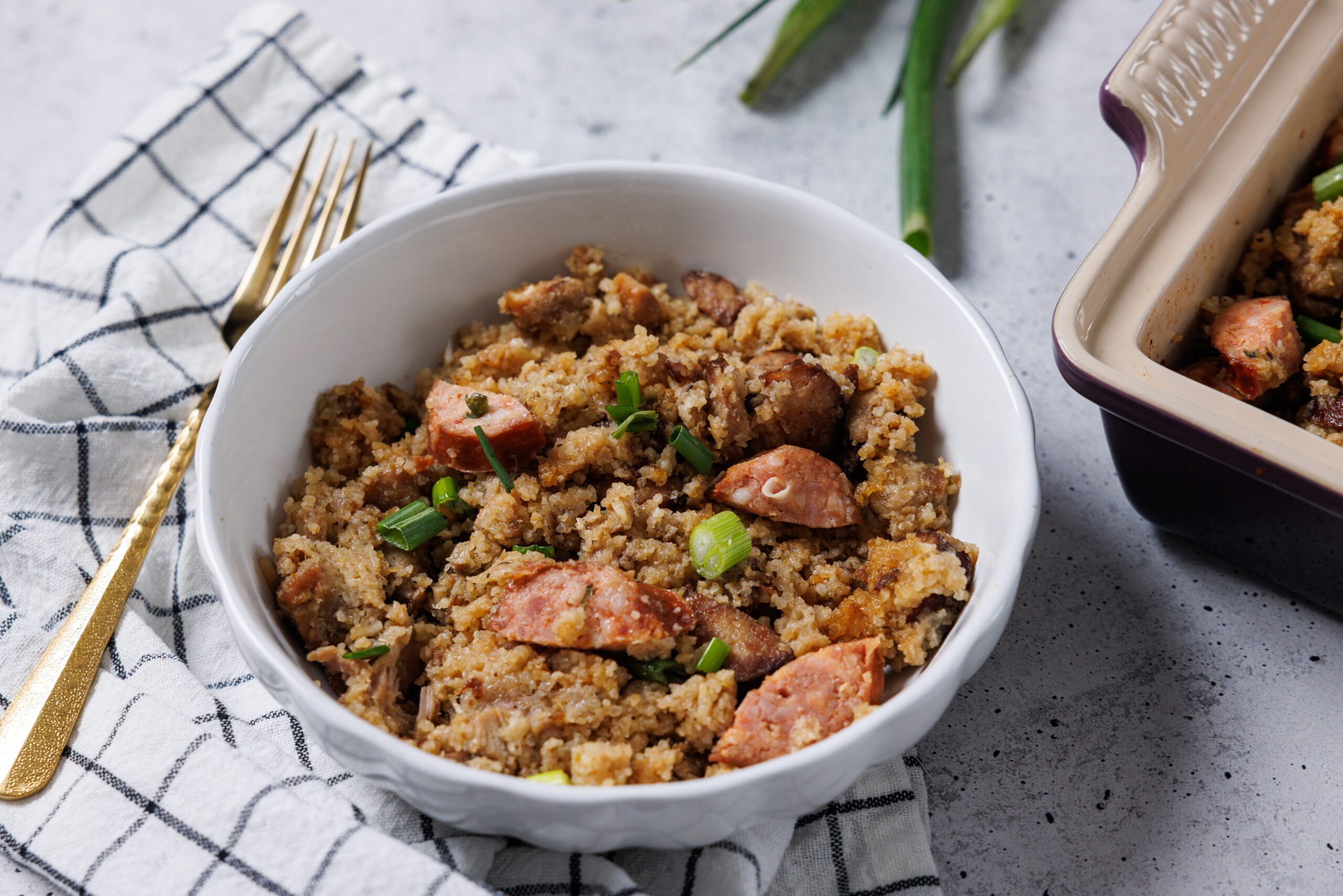
When it comes out, give it a moment. Let it rest. Then fluff it gently, and you’ll see that each grain of rice is infused with flavor, every bite layered and hearty, just like the jambalaya we know and love.
Is it traditional? Not exactly. Is it delicious, comforting and rooted in Louisiana flavor? Absolutely. Sometimes, the best recipes aren’t about doing things the old way; they’re about honoring where they came from while making them work for where we are now.
No-Hassle Louisiana Jambalaya
 1 lb. chicken thighs, cut into bite-sized pieces
1 lb. smoked sausage, chopped
1 lb. cooked pork shoulder, cubed
2 cups uncooked rice
3 cups chicken stock
1 can French onion soup
1 stick butter, sliced
1 yellow onion, diced
1 green bell pepper, diced
1-2 celery stalks, diced
Cajun seasoning, to taste
Garlic powder, to taste
Onion powder, to taste
Complete seasoning, to taste
Green onions, sliced (for garnish)
Fresh parsley, chopped (for garnish)
Preheat oven to 400°F.
Season chicken, smoked sausage and pork shoulder generously with Cajun seasoning.
In a large skillet over medium-high heat, brown smoked sausage first until lightly crisped. Remove and set aside.
In the same pan, cook chicken until golden brown and partially cooked through. Remove and set aside.
Add pork shoulder and sauté until cooked through and slightly caramelized. Remove and set aside.
Pour in a cup of chicken stock and scrape up browned bits from bottom of pan. (This step captures all that rich flavor and carries it into the dish.)
In a large baking dish, combine uncooked rice, French onion soup, deglazed stock from the skillet and remaining chicken stock, and stir gently to combine.
Fold in diced onion, bell pepper and celery.
Add browned meats, distributing evenly throughout.
Top with slices of butter across surface.
Cover tightly with foil and bake for 1 hour, or until rice is tender and chicken and pork are completely cooked. Remove from oven and let rest for a few minutes. Gently fluff rice, mixing everything together.
Top with sliced green onions and fresh parsley. Serve hot.
Tip: Browning each meat separately and deglazing the skillet is what gives this one-pan jambalaya that deep, slow-cooked flavor.
Makes 10 to 12 servings.