


An antique expert explains the magic of Venetian mirrors
As the saying goes, they just don’t make things like they used to. And when it comes to unique pieces like Venetian mirrors, their distinctive elements and intricate craftsmanship keep designers coming back to them again and again.

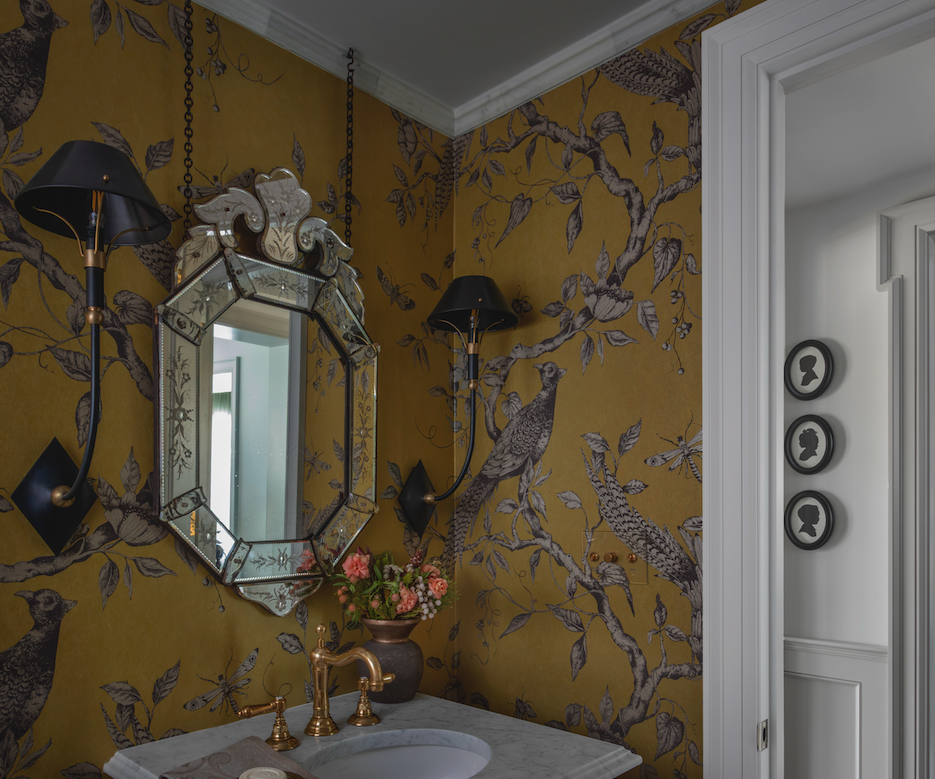
In this home, the team at TIEK BYDAY included a vintage Venetian mirror over the sink in the powder bathroom. Design professional Bridget Tiek says she loves Venetian mirrors because of their craftsmanship and elegance.
“We sourced this mirror from Fireside Antiques, and it provided the perfect old-world balance to the contemporary lacquered vanity in this powder room,” Bridget says. “We source antique Venetian mirrors at our local antique shops, as well as markets like Round Top and Marché aux Puces.”
We tapped Laura Roland, owner of Fireside Antiques, to learn more about the elements that make up a Venetian mirror and to better understand the rich history of these pieces. See the Q&A below to read her responses.
What is a Venetian mirror?
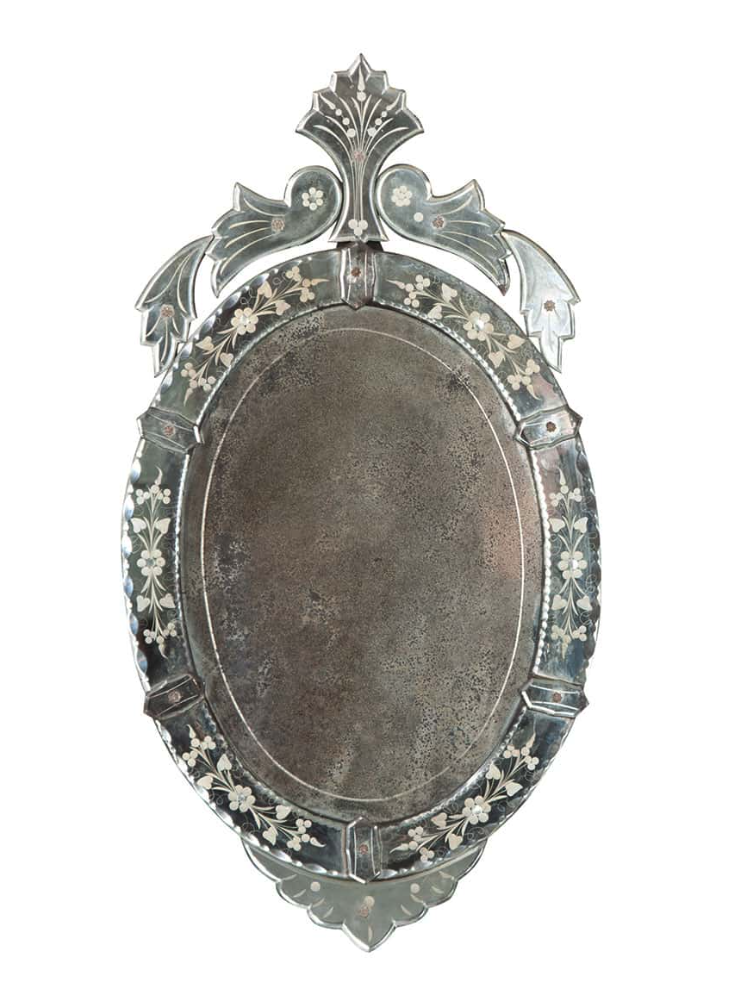
“What makes a Venetian mirror distinctive is the many layers of plates of mirror glass used to assemble the frame. The mirror glass is embellished with ornate floral vines, scrolls or birds that artisans have engraved, etched or cut by hand. Compared to giltwood frames with a single mirror plate, the Venetian mirror typically uses strips and shapes of cut and beveled glass segments to form a frame around the central mirror plate, held in place by small glass elements like rosettes. Basically, a Venetian (from Venice) mirror has a central mirror plate surrounded by a mirrored frame made of many parts.”
What is the history behind Venetian mirrors?
“A Venetian mirror is a decorative mirror style that developed in Venice (specifically the island of Murano, Italy) from the 16th to 17th centuries and was perfected by the early 1700s. During the Renaissance, Venetian glassmakers—especially those on Murano—closely guarded their techniques, making Venetian mirrors luxury items across European courts. What’s extraordinary is that we are still in awe of them four centuries later!”
How can you tell if a Venetian mirror is an antique or a reproduction?
“Antique Venetian mirrors (1700s-1800s) show waviness or distortion in the reflection because the mirror plate glass is thick and backed with mercury, which oxidizes over time. When mercury oxidizes, you’ll see black spots in the reflection, called “foxing,” and/or crystals, like a glittery veil, over the whole plate or collected at the bottom. The reflection may appear softer or have a slightly gray filter. Hand-cut beveled edges, facets and other decorations applied by hand will show slight irregularities.
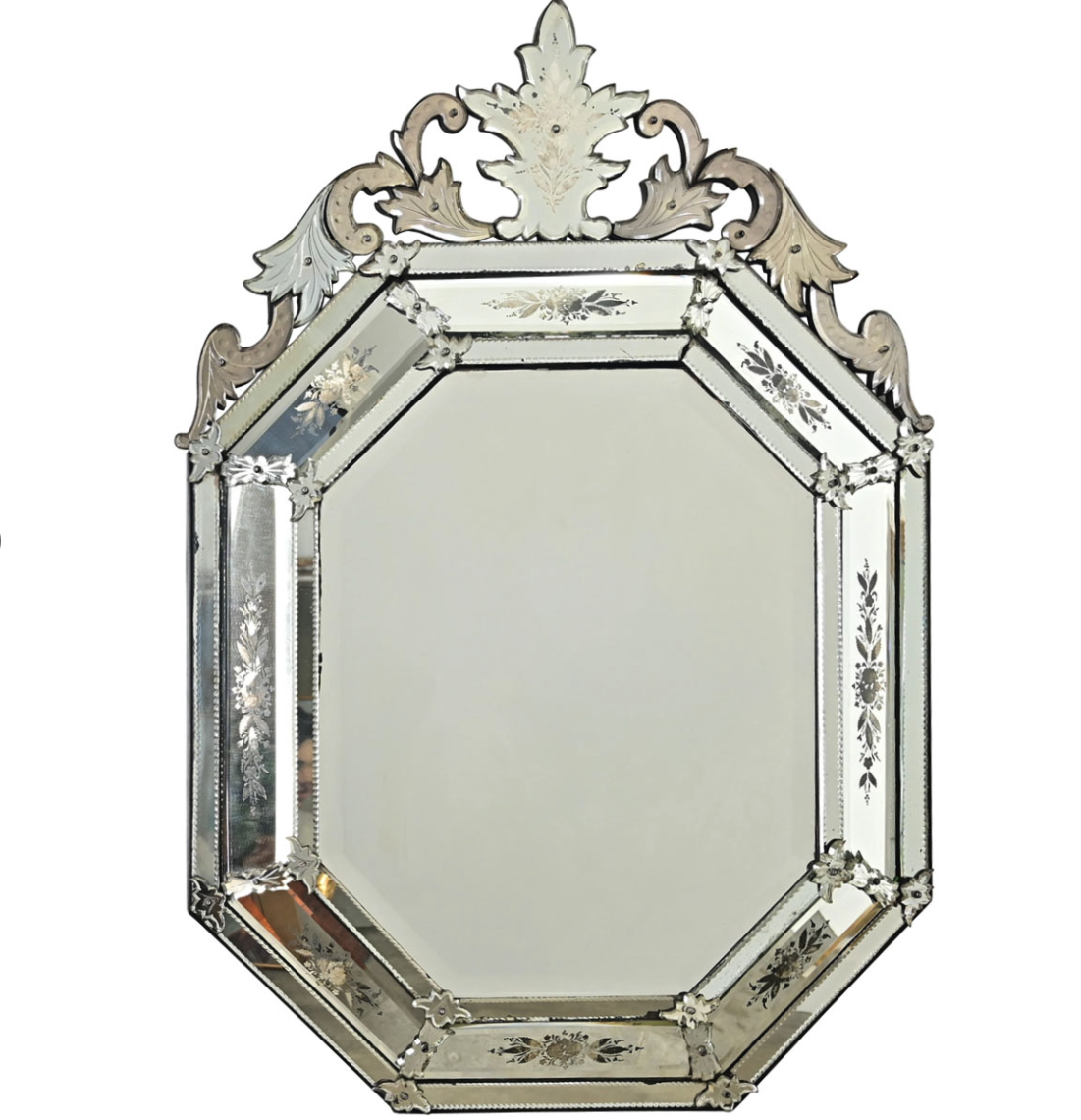
Reproductions were typically made in the late 1800s as part of the Industrial Revolution, and mercury was outlawed due to its toxicity levels when applied. In industrial or machine technology, the reflection is clear, without dark foxing or crystal sparkle. The designs look uniform, featuring straight beveled edges, thinner mirror plates, and consistent spacing for perfect symmetry.”