


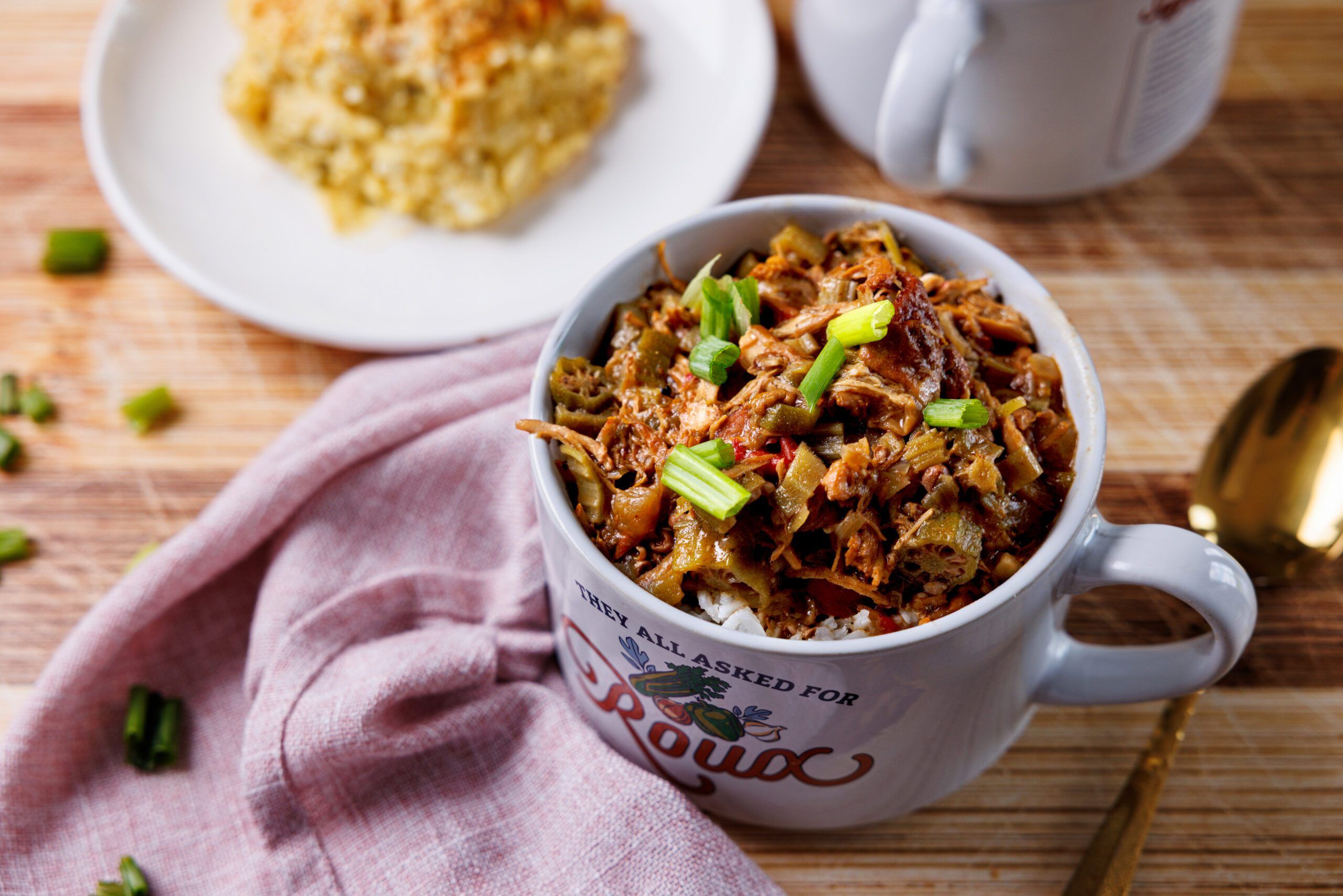
Gumbo weather has arrived, which means it’s time to pull out the big pot and get cooking
As a Louisiana native, the first cool front in Louisiana changes the chemistry of my brain. It may only last a day or two, and there’s a good chance we’ll be back in short sleeves by the weekend, but the minute that temperature drops, gumbo starts sounding like a very good idea.
November is when I really start reaching for the big pots again, and Chicken and Sausage Gumbo is always high on the list. Everybody has their own way of making it, and if you grew up around Louisiana cooking, you already know gumbo can look a little different from one kitchen to the next.
Some people add okra. Some don’t. Some use store-bought stock, while others make theirs from scratch. And everybody has an opinion about how dark the roux should be.
This is how I make mine. I start with homemade chicken stock, a dark stovetop roux, lots of fresh seasonings, plenty of smoked sausage and chicken, and yes, I add okra.
Making the stock from scratch adds an extra step, but it gives the gumbo so much flavor! I cook the chicken right in the stock with onions, bell peppers, celery, carrots, garlic, bay leaves and peppercorns. Once the chicken is cooked, I debone it and strain all the flavorful stock for the gumbo.
Next comes the part that requires your full attention: the roux. Before I start my roux, everything else is prepped and ready to go. The sausage is sliced and boiled (removes grease). The vegetables for the trinity (onions, bell pepper and celery) are chopped. The chicken is deboned, and the okra has been deslimed. Because once that flour hits the oil, I’m not walking away from the stove.
Be ready to stir continuously until the roux reaches the color you want. I like to allow my roux to develop into a deep chocolate color. As soon as it gets there, I add my chopped seasonings to stop the cooking process of the roux. From there, everything starts coming together.
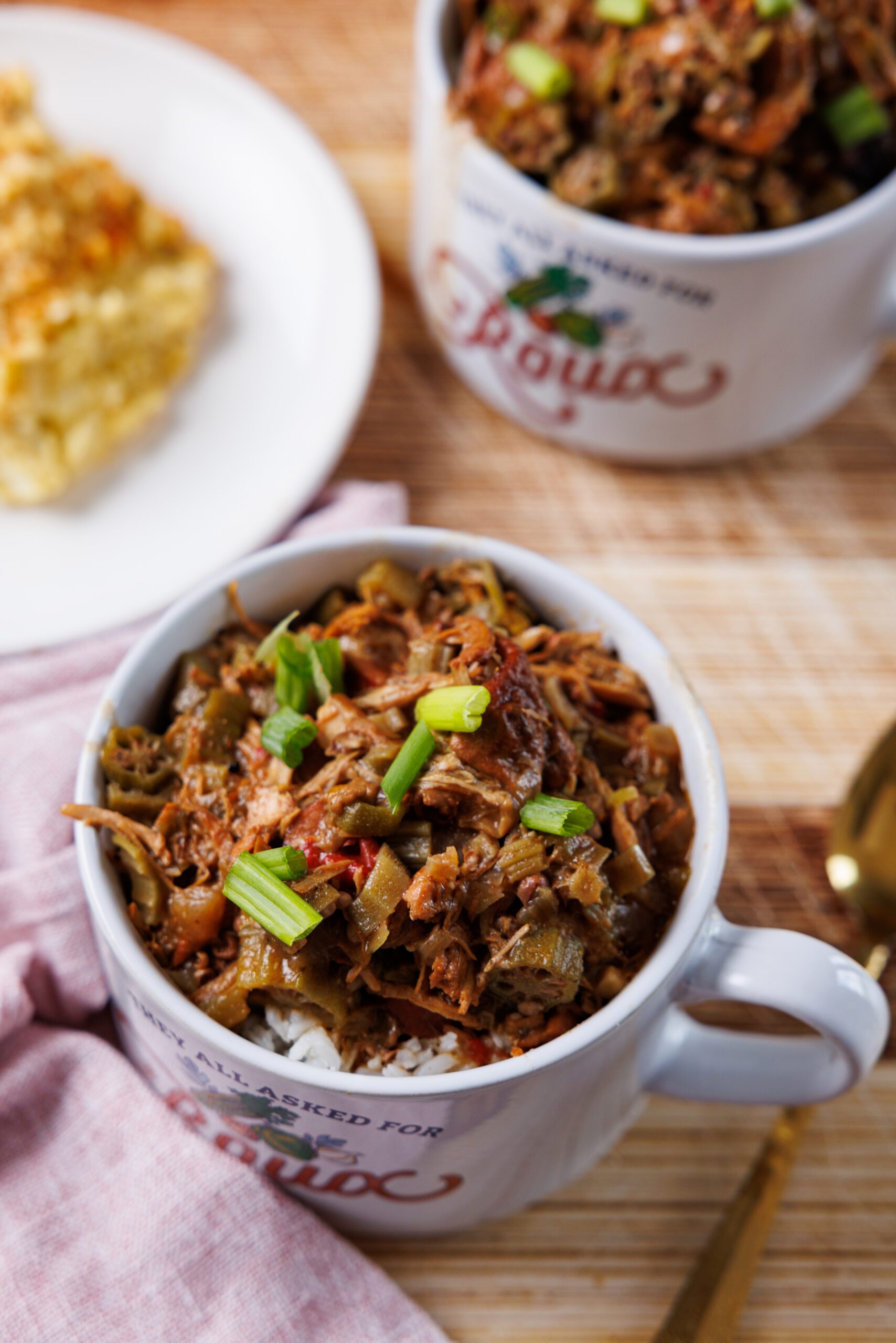
This recipe makes a big pot, which is exactly how I like to make gumbo. There’s enough to feed a crowd, enough for seconds and, hopefully, enough left for the next day. We all know that gumbo is one of those dishes that somehow tastes even better after it has had a little time to sit. Serve it over hot rice, add a little green onion on top and keep the hot sauce and gumbo filé nearby.
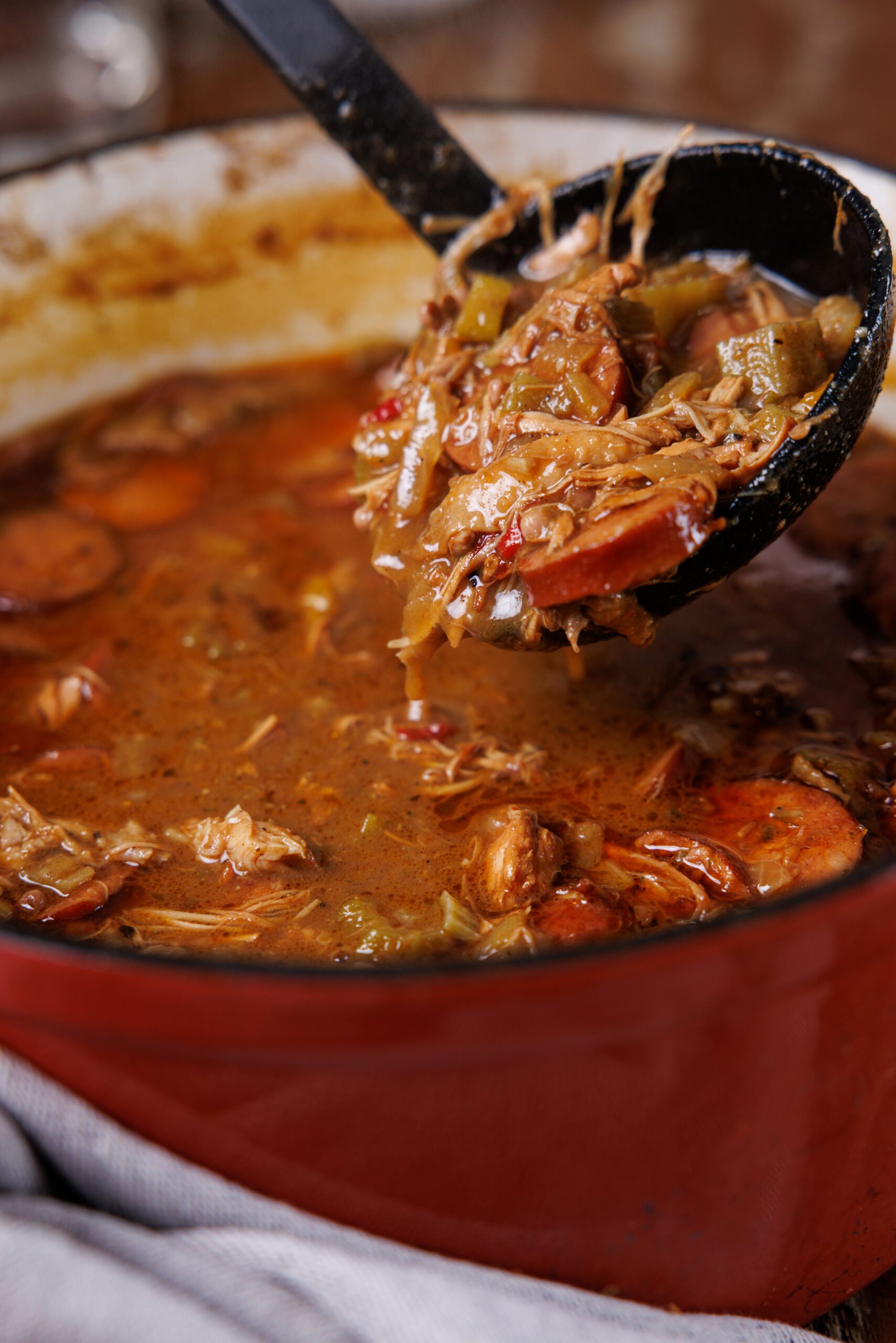
Chicken and Sausage Gumbo
For Chicken Stock:
Water
1 whole chicken
3 yellow onions, quartered
2 bell peppers, quartered
3 celery stalks, roughly chopped
5 whole carrots, peeled and roughly chopped
3 heads garlic, peeled
2 Tbsp. salt
6 bay leaves
10–15 whole peppercorns
For Roux:
2 cups all-purpose flour
1¾ cups vegetable oil
For Gumbo:
2 white onions, diced finely
2 green bell peppers, diced finely
4 celery stalks, diced finely
2 Tbsp. minced garlic
3 lb. smoked sausage, sliced
1 lb. fresh or frozen okra, sliced
1 Tbsp. vinegar
Garlic powder, to taste
Onion powder, to taste
Badia Complete Seasoning, to taste
Smoked paprika, to taste
Slap Ya Mama Creole Seasoning, to taste
Culture Creole Seasoning, to taste
Oregano, to taste
Black pepper, to taste
Cayenne pepper, to taste
Sage, to taste
Thyme, to taste
Parsley, to taste
Salt, to taste
Chopped green onions, for garnish
Cooked white rice, for serving
Make Chicken Stock:
Fill a 16- to 20-qt. stockpot about ¾ full of water and place it over medium-high heat.
Add chicken, onions, bell peppers, celery, carrots, garlic, salt, bay leaves and peppercorns.
Bring stock to a rolling boil, then reduce heat slightly so that it maintains a steady boil without boiling over.
Cook for at least 1 hour, or until chicken is completely cooked and stock has developed a yellowish-brown color.
Remove chicken from stock and allow it to cool enough to handle. Remove and discard skin, debone chicken, and set meat aside.
Turn off heat under stock and keep it warm until you are ready to add it to the gumbo.
You can strain the entire stock or strain it little by little as you add it to the gumbo.
Gumbo Prep:
Chop onions, bell peppers and celery, and set aside.
Place sliced smoked sausage in a pot, cover with water, and boil about 15-20 minutes. (This helps remove excess grease.) Drain sausage and set it aside.
Heat a skillet over medium heat and add sliced okra along with 1 Tbsp. of vinegar. Season lightly with salt, black pepper, garlic powder and Creole seasoning.
Sauté until okra becomes a deeper green and much of the “slime” has cooked out. Remove from heat and set aside.
Make Roux:
Add vegetable oil to a heavy-bottomed gumbo pot or Dutch oven and heat over medium heat. Pot should be at least 11 qt.
Gradually add flour, stirring continuously until flour and oil are completely combined.
Continue cooking and stirring until roux gradually darkens to desired color. This can take at least 30 minutes.
Once roux reaches the color you like, immediately add chopped onion, bell pepper and celery mixture.
Put Gumbo Together:
Cook vegetables in roux until they begin to soften and become translucent. At this point, increase heat slightly.
Add minced garlic and cook for another 1–2 minutes.
Season roux and vegetables with garlic powder, onion powder, Complete Seasoning, smoked paprika, Creole seasoning, oregano, black pepper, cayenne, sage, thyme, parsley and salt to your taste.
Begin adding warm chicken stock a little at a time, stirring well after each addition so roux and stock blend together smoothly.
Continue adding stock until pot is a little more than halfway full, but no more than ¾ full. (Remember, you still need room for the chicken and sausage.)
Bring gumbo to a gentle boil over medium heat.
Add deboned chicken and drained smoked sausage. Reduce heat and allow gumbo to simmer for 45 minutes to 1 hour, stirring periodically.
Add prepared okra and simmer for another 15 minutes.
Taste gumbo and adjust seasonings as needed.
Serve over warm white rice and garnish with chopped green onions.
Note: Don’t throw away leftover homemade stock or gumbo. Freeze it. You’ll be glad that you did.
Makes 10-15 servings.